Common Clutch Problems
Written by Craig B

Common Clutch Problems

People who own cars with manual gearboxes may also notice something strange: a vibration when they let out the clutch. Read on to learn more.

1. The slave or master cylinder could start to leak. There are two types of clutches: hydraulic and cable-operated. Most cars today use hydraulic clutches, which use fluid from the cylinders to work. If the master or slave cylinder starts to leak fluid, it may be impossible to make hydraulic pressure. How to find the problem: If the cylinders are leaking, you will see fluid collecting under your automobile. You can also notice a strange smell coming from the exhaust if fluid drips on it.

2. The throwout might break down. The throwout bearing makes the pressure plate move. It sits on the transmission’s input shaft. It might wear down and lose lubrication because it is always rotating.

3. The clutch disc can be worn out. The shaft of your transmission has splines on the clutch disc. Driving carelessly will probably wear out the disc over time.

How to find the problem: When the clutch disc wears out, the clutch pedal will release higher. In this case, an automobile may have trouble speeding up while it is carrying a lot of weight.

4. The flywheel can get bent. The flywheel is attached to the end of the crankshaft by bolts, same how rotors are attached to axles. The flywheel can get too hot and bend over time.

How to find the problem: When you let off the clutch, you could feel vibrations as the surface of the flywheel becomes uneven.

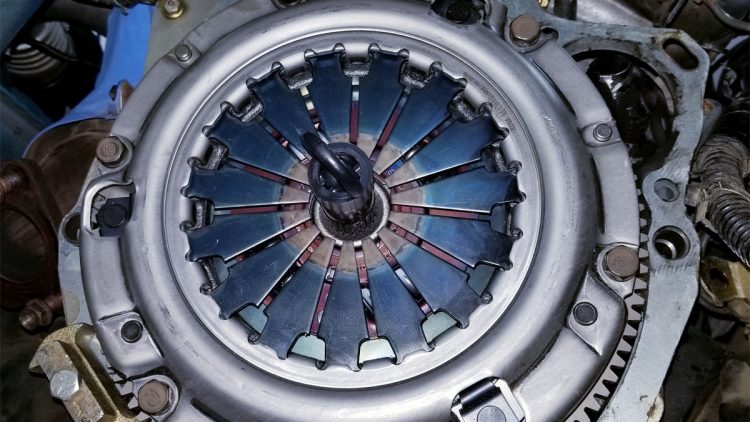
5. The pressure plate may be worn out. The pressure plate holds the clutch disc to the flywheel. Because it is one of the sections of your clutch that works the most, it can wear out quickly.

How to find the problem: A broken pressure plate can also cause vibration when you let out the clutch, just like a broken flywheel.

Transmission Service, Repair, & Replacement Services in Phoenix, AZ

We offer a full range of auto transmission repair and replacement services from automatic transmission to manual transmission to the entire Phoenix Metro area. Contact Automatic Transmission Exchange if you are in the Phoenix area and need transmission repair or replacement.

Common Clutch Problems
Written by webtechs

What Is a Clutch?

Clutches are used in components that have two shafts that rotate. One of the shafts is usually driven by a pulley or motor, and the other shaft drives another component. The clutch links the shafts so they can be secured to each other and spin at an identical speed or be uncoupled and spin at various speeds.

Why is a clutch used?

In a vehicle, you need a clutch due to the engine spinning all the time, but the vehicle’s wheels don’t. For­ a vehicle to stop devoid of the engine dying, the wheels are required to be separated from the engine in some way. The clutch allows a driver to freely engage a rotating engine to a non-rotating transmission by being in control of the slippage among them.

How many miles does a clutch last?

With adequate care and maintenance, a clutch could last up to approximately fifty thousand miles.

Common Clutch Issues

From the 50’s to the 70’s, you could count on getting around fifty thousand to seventy thousand miles from your vehicle’s clutch. Clutches nowadays last for more than eighty thousand miles if you use them lightly and keep them maintained. When not cared for, clutches can begin to break down at thirty-five thousand miles. Trucks that are continually overloaded or that regularly tow heavier loads can also have issues with somewhat new clutches.

Often the issue isn’t by it slipping, but by it sticking. If your clutch does not release correctly, it is going to continue to rotate the input shaft. This could cause grinding, or totally prevent your vehicle from going into gear. Some typical reasons a clutch could stick are:

  • Stretched-out or broken clutch cable: The cable requires the proper amount of tightness to push and pull adequately.
  • Leaking or faulty master and/or slave clutch cylinders: Leaks hinder the cylinders from building the necessary amount of pressure.
  • Air in the hydraulic line: Air impacts the hydraulics by taking up the space the fluid required to build up pressure.
  • Wrongly adjusted linkage: When your foot pushes the pedal, the linkage transmits an inadequate amount of force.
  • Incompatible clutch components: Not every non-OEM part will work with your clutch.

Transmission Service, Repair, & Replacement Services in Phoenix, AZ

We offer a full range of auto transmission repair and replacement services from automatic transmission to manual transmission to the entire Phoenix Metro area. Contact Automatic Transmission Exchange if you are in the Phoenix area and need transmission repair or replacement.