
Transmission Cooler for Towing in Phoenix: Do You Need One?
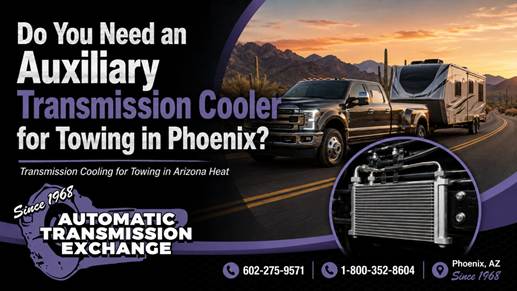
Towing places more demand on an automatic transmission than ordinary driving. The vehicle must move additional weight, manage repeated gear changes and control heat created inside the torque converter and clutch packs. In Phoenix, that work often happens in triple digit temperatures, slow traffic or long climbs outside the Valley.
An auxiliary transmission cooler may help some trucks, SUVs and vans, but it is not an automatic upgrade for every vehicle. The correct decision begins with the manufacturer’s towing requirements and the vehicle’s actual use.
Start With the Factory Towing Specifications
Check the owner’s manual, towing guide and equipment list before adding anything. Maximum trailer ratings apply only when a vehicle has the required engine, axle ratio, hitch, cooling equipment and other factory components.
Some towing packages already include an automatic transmission oil cooler. Ford’s 2026 towing guide, for example, lists one as included equipment on certain packages. Adding another cooler without understanding the existing layout can create unnecessary expense.
Never use an auxiliary cooler as a reason to exceed the vehicle’s tow rating, gross combined weight rating or payload limit.
Why Towing Creates More Transmission Heat
Automatic transmission fluid operates hydraulic controls, lubricates moving parts and carries away heat. Towing increases the load during acceleration, hill climbing and stop and go driving. The torque converter may spend more time multiplying torque or slipping before its lockup clutch engages.
Phoenix conditions add another challenge. Hot outside air and slow traffic reduce cooling airflow. A loaded vehicle climbing toward Payson or Flagstaff may work much harder than it does during an unloaded trip across town.
When an Auxiliary Cooler May Be Useful
A properly selected cooler may be worth discussing when a vehicle tows regularly, carries heavy loads, operates in desert heat or has shown higher transmission temperatures during towing.
It may also be considered when a truck lacks the manufacturer’s heavier towing package, provided the vehicle remains within all published limits. The existing cooling system must be inspected first. A restricted factory cooler, damaged line, poor airflow or engine cooling fault should be repaired rather than hidden by another component.
The cooler must match the transmission, available space and load.
Watch for Signs of Excessive Heat
Modern vehicles may display transmission temperature or show a warning when the fluid becomes too hot. Follow the owner’s manual immediately. Some manufacturers direct drivers to stop safely and allow the transmission to cool.
Other warning signs include a burning odor, delayed engagement, harsh shifts, slipping or a change in performance after towing for a while. Those symptoms do not prove the cooler is too small. Low fluid, worn parts, converter trouble and electrical faults can create similar behavior.
Arrange diagnosis before installing an upgrade.
Installation Details Matter
An auxiliary cooler must receive suitable airflow without blocking too much air from the radiator or air conditioning condenser. Lines need to be routed away from exhaust heat, sharp edges and moving parts. Connections must be secure and compatible with the correct fluid.
Depending on the vehicle, the auxiliary unit may work with the factory radiator cooler rather than replacing it. A professional installer should confirm the correct flow arrangement, hose type and mounting method.
After installation, the system should be checked for leaks and proper fluid level using the specified procedure.
Review the Complete Towing Setup
Cooling is only one part of reliable towing. Confirm the trailer weight, tongue weight, hitch rating, tire pressures, brakes and maintenance schedule. Fluid that is already burnt, contaminated or overdue for service will not be restored by adding a cooler.
Drivers who tow frequently may also need a transmission or torque converter designed for heavier use. Automatic Transmission Exchange offers Xtreme Duty units with upgraded cooling, lubrication and internal components for demanding applications.
Ask Automatic Transmission Exchange About Towing and Cooling
Automatic Transmission Exchange has served Phoenix drivers, fleets and commercial customers since 1968. The shop provides transmission diagnosis, repair, replacement, remanufacturing, auxiliary cooler service and Xtreme Duty transmission options for towing and hauling vehicles. Call 602-275-9571 or toll free at 1-800-352-8604 to have your vehicle and towing needs evaluated before the next heavy trip.
References
Automatic Transmission Exchange: Xtreme Duty Transmissions
Automatic Transmission Exchange: Additional Services
Automatic Transmission Exchange: Transmission Service and Repair
Ford: 2026 RV and Trailer Towing Guide
General Motors: Transmission Temperature Warning Guidance
AGCO Automotive: Do I Need an Auxiliary Automatic Transmission Cooler?